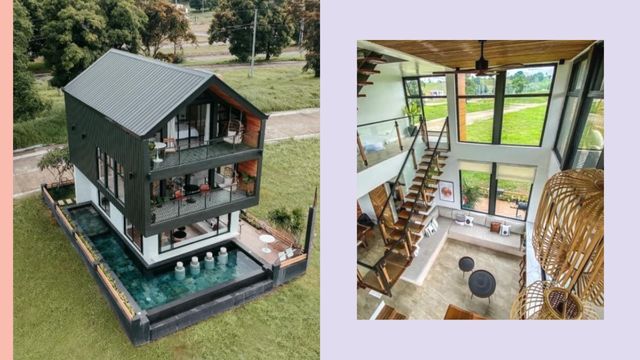
The minimalist lifestyle has been gaining quite a following, especially in paring down decorations at home and living with only the essentials. Because of this, retail stores have been catering to this movement by creating products with a minimalist and clean aesthetic.
One such store is MUJI, a Japanese brand known for their minimalist items, which echo a distinct design style meant to counter the lifestyle of excess that seems to be the norm nowadays. On October 22, MUJI art director and Advisory Board member Kenya Hara, a world-renowned graphic designer and curator, gave a talk at the De La Salle University Manila on the basic philosophy behind the design of the products offered by the brand.
Minimalism should be like a creative receptacle
During the talk entitled “Emptiness,” Kenya Hara explored how the idea of emptiness is rooted in Japanese culture, and how it is then translated into the visual aspect of MUJI products.
He began by talking briefly about traditional Japanese Shinto temples, which feature empty spaces that are meant to serve as dwelling places for the deities. Though that space is provided, there is no certainty that it will be filled, which allows people to explore the possibilities with their imagination and creativity. “Emptiness is the possibility of being filled,” Hara shared. “People put imagination in the empty space.”
He further shared that in Japanese design, the empty space is given more importance than the drawn space: “This empty space is a creative receptacle of images.”
The secret is simplicity and emptiness
Though many associate the word “simple” to describe the brand's products, Hara prefers to use the term “empty”—a point he also explores in the talk.
In contrast to the Western notion of simplicity which pursues functionality and rationality in design, in Japan, the aim is to create pieces that are free from any particular styles, so that they are flexible and can be used in a variety of contexts.
In a world where it seems excess and wastage are the norm, living a tidy, minimalist lifestyle undoubtedly seems very appealing. Living with less, and if not immediately possible—living with products of minimal but functional design—can be the solution.
This story originally appeared on Realliving.com.ph.
* Minor edits have been made by the Femalenetwork.com editors.